
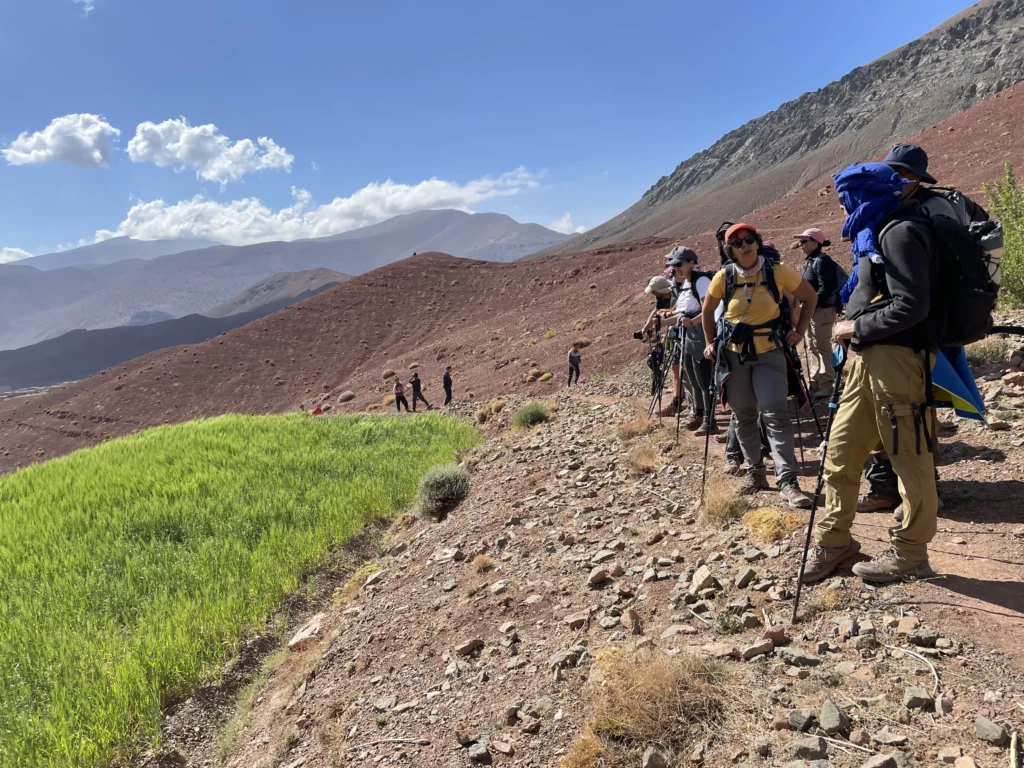
The Difference Between Hiking, Trekking, and Backpacking
Walk into any outdoor gear shop, browse any adventure travel website, or join any nature enthusiast community, and you will encounter three words used constantly sometimes interchangeably, sometimes with heated debate about their correct meaning: hiking, trekking, and backpacking.
Are they the same thing with different names? Are they completely distinct activities requiring different skills and equipment? The honest answer lies somewhere in between. These three activities exist on a continuum, sharing the same fundamental joy of moving through the natural world on foot, yet each occupying its own space in terms of duration, intensity, logistics, and spirit.
This article breaks down each activity clearly, compares them directly, and helps you identify which one you are actually doing and which one you might want to try next.
Hiking: The Everyday Adventure
What It Is
Hiking is the most accessible of the three activities. At its core, hiking means walking on a natural trail or path for recreational purposes. It is typically a day activity you set out in the morning and return home or to your car by evening. No overnight stay, no tent, no sleeping bag.
Hiking can range from a gentle 2 km stroll through a local nature reserve to a demanding 20 km mountain day hike with significant elevation gain. What unites them is that the activity begins and ends within a single day, and you carry only what you need for those hours: water, food, a first-aid kit, layers, and a map.
Key Characteristics of Hiking
- Duration: A single day typically 1 to 8 hours
- Overnight stay: None. You return to a base (home, hotel, campsite) by nightfall
- Pack weight: Light usually 5 to 10 kg for a day pack
- Terrain: Maintained trails to rough natural paths; does not typically involve technical terrain
- Fitness required: Ranges from minimal (easy nature walks) to high (strenuous mountain day hikes)
- Planning required: Moderate trail selection, gear, weather check
- Cost: Low to moderate. Often requires no paid access beyond transport to the trailhead
Who Hikes?
Everyone. Hiking is the entry point to the world of outdoor adventure. Families with young children, elderly adults seeking gentle exercise, serious athletes pushing their limits on 30 km mountain routes all of them are hikers. The activity scales to the individual, which is precisely why it is so universally beloved.
The Spirit of Hiking
Hiking is fundamentally about presence. A walk through a forest, a climb to a viewpoint, a ramble along a coastal path hiking invites you to slow down, notice the world around you, and return home the same day with tired legs and a clearer mind. It is the most democratic outdoor activity there is.
Trekking: The Multi-Day Journey
What It Is
Trekking is extended hiking. Where hiking ends at sunset, trekking continues for days, weeks, or even months. A trek is a journey on foot that spans multiple days, typically through remote or mountainous terrain, requiring overnight stays in tents, mountain huts, tea houses, or lodges along the route.
Some of the world’s most famous outdoor experiences are treks: the Annapurna Circuit in Nepal, the Camino de Santiago across Spain, the Tour du Mont Blanc through France, Italy, and Switzerland, and the Overland Track in Tasmania. These are routes that cannot be completed in a single day they require planning, sustained effort, and a willingness to live simply for an extended period in the outdoors.
Key Characteristics of Trekking
- Duration: Multiple days to multiple weeks (commonly 3 to 30+ days)
- Overnight stay: Yes in tents, mountain huts, or lodges along the route
- Pack weight: Medium to heavy typically 10 to 20 kg including overnight gear
- Terrain: Often remote, mountainous, or wilderness terrain; can include high altitude
- Fitness required: Moderate to high; stamina is essential for consecutive days of walking
- Planning required: Significant permits, accommodations, resupply points, emergency plans
- Cost: Moderate to high, depending on destination and logistics
Trekking vs. Hiking: The Core Distinction
The single clearest distinction between hiking and trekking is overnighting. The moment a walking journey requires sleeping outdoors or in mountain accommodation along the route, it becomes a trek. A trekker carries not just food and water for the day but the equipment or the plan to sleep, eat, and live on the trail for consecutive days.
This distinction has important implications. Trekkers must manage fatigue across multiple days rather than a single outing. They must plan for resupply, accommodation or camping logistics, and the physical and psychological demands of sustained time in remote environments.
The Spirit of Trekking
Trekking is about journey and transformation. Unlike hiking, where the destination is often a viewpoint or summit reached and returned from in a day, a trek unfolds over time. The landscape changes, the body adapts, and the mind shifts into a slower rhythm. Many trekkers describe the experience as profoundly clarifying a removal from ordinary life long enough to see it differently.
Backpacking: Self-Sufficiency in the Wilderness
What It Is
Backpacking shares many characteristics with trekking it is multi-day, it involves sleeping outdoors, it requires significant planning. But backpacking has a distinct defining element: the backpacker carries everything they need to survive entirely on their back. There are no tea houses, no mountain refuges, no porters. The backpacker is entirely self-sufficient.
Backpacking in its purest form means venturing into wilderness areas with a tent, sleeping bag, cooking equipment, and several days of food, relying entirely on what you carry and what nature provides (water from streams, filtered and purified) to sustain yourself. The routes are often unmarked or only loosely defined, and the environment is genuinely remote.
It is important to note that the word “backpacking” is used differently in different cultures. In North America and Australia, backpacking almost universally refers to wilderness travel as described above. In Europe and parts of Asia, “backpacking” is sometimes used to describe budget travel with a large rucksack, hopping between hostels and cities. This article uses the outdoor, wilderness definition throughout.
Key Characteristics of Backpacking
- Duration: Multiple days to multiple weeks
- Overnight stay: Yes exclusively in tents or bivouacs that you carry
- Pack weight: Heavy typically 15 to 25 kg (or less with ultralight gear)
- Terrain: Often wilderness, unmaintained, or cross-country routes; requires strong navigation skills
- Fitness required: High carrying a heavy pack over demanding terrain for multiple consecutive days
- Planning required: Extensive Leave No Trace principles, bear canisters, permits, water source mapping, weather contingency plans
- Cost: Moderate upfront (significant gear investment), low ongoing (wilderness areas are often free)
- Self-sufficiency: Complete no external food, shelter, or support along the route
The Ultralight Movement
In recent years, a significant subculture of ultralight backpacking has grown within the backpacking community. Ultralight backpackers obsessively minimize pack weight often targeting a base pack weight (everything except food and water) of under 4.5 kg through the use of lightweight materials, carefully curated gear lists, and the willingness to sacrifice certain comforts for mobility and speed.
This approach has transformed long-distance wilderness travel, making it accessible to a wider range of body types and fitness levels, and enabling experienced hikers to cover extraordinary distances.
The Spirit of Backpacking
Backpacking is about radical self-reliance. To carry your world on your back into a wilderness that cares nothing for your plans or comfort and to navigate it, sleep in it, eat in it, and emerge from it days later is to experience a fundamental human capability that most modern life never calls upon. It is demanding, sometimes uncomfortable, occasionally frightening, and deeply, lastingly rewarding.
Side-by-Side Comparison
| Feature | Hiking | Trekking | Backpacking |
|---|---|---|---|
| Duration | Hours (single day) | Days to weeks | Days to weeks |
| Overnight stay | No | Yes (huts, lodges, or tent) | Yes (tent only, self-carried) |
| Pack weight | 5–10 kg | 10–20 kg | 15–25 kg (or ultralight) |
| Self-sufficiency | Partial | Partial to high | Complete |
| Terrain | Maintained to rough trails | Remote, often mountainous | Wilderness, often unmaintained |
| Navigation skill needed | Basic | Intermediate | Advanced |
| Fitness required | Low to high | Moderate to high | High |
| Planning intensity | Low to moderate | Significant | Extensive |
| Entry barrier | Very low | Moderate | High |
| Cost | Low | Moderate to high | Moderate (high initial gear cost) |
| External support available | Often nearby | Sometimes (lodges, porters) | None |
Where the Lines Blur
In practice, the boundaries between these three activities are often fluid, and reasonable people disagree on exactly where one ends and another begins. A few examples illustrate this overlap:
- A two-day hike with a hut overnight: Is this hiking or trekking? Most would call it a short trek, since it involves an overnight stay. But some would argue that staying in a maintained hut without carrying overnight camping gear keeps it closer to a hike.
- The Camino de Santiago: Technically a multi-week journey on foot it is universally called a trek or pilgrimage. Yet pilgrims stay in albergues (hostels) and carry relatively light packs. It does not fit the wilderness backpacking mold at all.
- A three-night wilderness trip in a national park: This is unambiguously backpacking tent, full gear, self-sufficient. But many people would also call it trekking, especially outside North America.
The terminology also varies significantly by country. In the United Kingdom, all forms of walking in the hills are commonly called “hillwalking” or simply “walking.” In New Zealand, even major multi-day trails like the Milford Track are officially called “tramping.” In South Asia, trekking is the dominant term for almost any serious mountain walk, day or multi-day.
Rather than getting lost in linguistic debate, what matters is understanding the practical differences in duration, self-sufficiency, gear, and planning so you can prepare appropriately for whatever adventure you are planning.
A Natural Progression: From Hiking to Backpacking
For most outdoor enthusiasts, these three activities represent a natural arc of progression. Very few people begin their outdoor lives with a solo wilderness backpacking trip. The journey typically looks something like this:
- Day hikes on easy trails: Building basic fitness, learning to read a trail, discovering preferred terrain types, practicing gear selection and pack management.
- Longer and more challenging day hikes: Developing endurance, gaining experience with weather changes, building confidence on varied terrain.
- First overnight hike (beginner trek): Spending one night in a hut, lodge, or tent. Learning how to manage fatigue across two days, how to sleep in the outdoors, and how to pack for overnight stays.
- Multi-day treks on established routes: Following a defined trail over several days with accommodation or camping at set points. Building expedition mentality and resilience.
- Wilderness backpacking: Carrying full self-sufficiency gear into remote terrain. Navigating less-defined routes, managing water sourcing, and developing deep self-reliance.
This progression is not a requirement some people are perfectly happy at step two and have no interest in wilderness camping. Others leap forward quickly through guided treks or with more experienced companions. But understanding the progression helps you identify where you are, where you want to go, and what skills and gear you need to get there.
How the Gear Differs
Each activity has its own gear profile. While there is significant overlap appropriate footwear, layers, navigation tools, and first-aid supplies are essential for all three the gear list grows substantially as you move from hiking to trekking to backpacking.
| Gear Category | Hiking | Trekking | Backpacking |
|---|---|---|---|
| Footwear | Trail runners or day hiking boots | Mid or full hiking boots | Full hiking boots (stiff sole for heavy load) |
| Pack size | 15–30 liters (day pack) | 40–55 liters | 50–75 liters |
| Shelter | Not needed | Emergency bivy; lodge or hut accommodation | Tent or tarp (carried at all times) |
| Sleeping gear | Not needed | Sleeping bag if camping; often provided in huts | Sleeping bag and sleeping pad (essential) |
| Cooking equipment | Not needed | Sometimes; often meals available at lodges | Stove, fuel, cookpot, utensils (carried) |
| Water treatment | Optional (carry sufficient water) | Recommended for remote sections | Essential (filter, tablets, or UV purifier) |
| Navigation | Phone with offline map; paper map optional | Map and compass; GPS device recommended | Map, compass, and GPS all three standard |
| Food quantity | Snacks and one meal | Multiple days of food (or resupply at lodges) | Full caloric needs for all days, carried from start |
Which Is Right for You?
Choosing which activity to pursue depends on your current experience, fitness, available time, and what kind of experience you are seeking. Here are some honest guidelines:
Start with Hiking if…
- You are new to the outdoors and have little or no trail experience
- You want to test your interest before investing in expensive equipment
- You have limited time and cannot commit to multi-day trips
- You are building fitness gradually from a lower base
- You are traveling with children or mixed-ability groups
Move to Trekking when…
- You have completed several challenging day hikes comfortably
- You want to experience a destination that cannot be seen in a single day
- You are comfortable with basic navigation and trail reading
- You have access to appropriate multi-day gear or can rent it
- You want the experience of living on the trail for several days in a structured, supported way
Consider Backpacking when…
- You have completed multi-day treks and are comfortable in remote terrain
- You want complete freedom to camp wherever regulations allow
- You have strong navigation skills and wilderness first-aid knowledge
- You are drawn to solitude and genuine wilderness over marked routes and lodges
- You are willing to invest in and learn to use full overnight wilderness gear
Conclusion
Hiking, trekking, and backpacking are not competing activities they are chapters in the same story. Hiking is the opening chapter: accessible, joyful, and available to nearly everyone. Trekking is the expanding middle: days strung together, landscapes unfolding, the self tested by sustained effort. Backpacking is the deep end: radical self-reliance, wilderness immersion, and the quiet satisfaction of carrying everything you need and needing only what you carry.
Whether you spend your entire outdoor life as a day hiker and love every minute of it, or whether you progress through every stage and eventually spend weeks at a time in remote wilderness all of it is valid. All of it connects you to the natural world in a way that is increasingly rare and increasingly valuable.
Put on your boots. Step outside. The trail will tell you where you belong.
Always venture outdoors responsibly and within your skill level.