
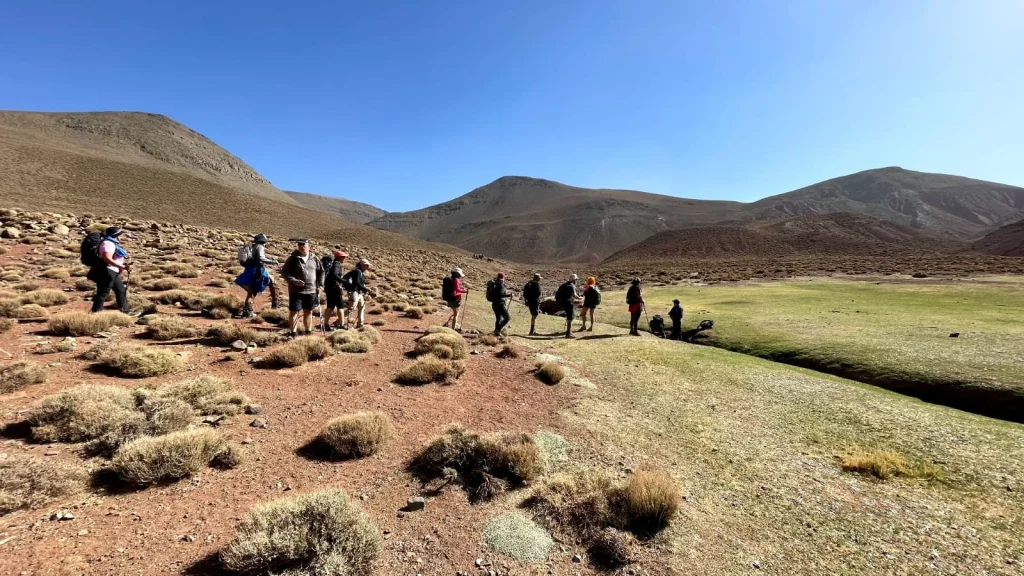
Trekking in the High Atlas Mountains of Morocco
Rising dramatically from the ochre plains of Morocco, the High Atlas Mountains form one of North Africa’s most spectacular and underexplored trekking destinations. Stretching over 2,500 kilometers from the Atlantic coast to the Algerian border, this ancient mountain range is home to jagged peaks, hidden Berber villages, cascading waterfalls, and valleys carpeted in almond trees and wildflowers. For those seeking an adventure off the beaten path, the High Atlas offers a trekking experience unlike any other — where centuries of tradition meet raw natural beauty.
Geography and Landscape
The High Atlas is the highest range in North Africa, with its crown jewel being Jebel Toubkal, standing at 4,167 meters above sea level — the tallest peak on the entire continent outside of East Africa. The range divides Morocco’s climate zones, with lush, green valleys on the northern slopes and arid, desert-like terrain to the south that gradually melts into the Sahara.
The landscape is dramatically varied. Trekkers can pass through dense cedar forests, cross boulder-strewn rivers, ascend rocky ridgelines, and walk through terraced agricultural fields still farmed with traditional methods. In winter and early spring, the upper altitudes are blanketed in snow, transforming the terrain into an alpine wonderland. By late spring and summer, wildflowers bloom across the meadows, and the trails come alive with color.
Popular Trekking Routes
1. Toubkal Summit Trek
The most iconic route in the High Atlas is the ascent of Jebel Toubkal. Starting from the village of Imlil, about 60 kilometers south of Marrakech, the classic route takes two to three days. The first day leads through the Mizane Valley to the Toubkal Refuge at 3,207 meters, where trekkers spend the night before making the final push to the summit. The summit offers panoramic views stretching from the Sahara to the Atlantic on a clear day. No technical climbing skills are required, but a good level of fitness and proper acclimatization are essential.
2. The M’Goun Massif Trek
East of Toubkal lies the M’Goun Massif, home to Jebel M’Goun (4,071 m), the second-highest peak in Morocco. The M’Goun Trek is considered more remote and rewarding than the Toubkal route. It typically takes five to seven days and passes through the breathtaking Arous and Tessaout gorges, flower-filled plateau meadows, and isolated Berber villages where very few tourists venture. This trek offers an authentic cultural immersion alongside stunning scenery.
3. The Toubkal Circuit
For trekkers who want more than just a summit ascent, the Toubkal Circuit is a multi-day loop around the Toubkal massif, typically completed in five to seven days. The circuit traverses multiple passes — known locally as tizis — including the Tizi n’Ouanoums (3,664 m) and Tizi n’Ouagane (3,750 m), offering constantly changing views and a deep sense of the region’s scale and diversity.
4. Valley of the Roses (Dadès Valley Approach)
On the southern flank of the High Atlas, routes descending toward the Dadès Valley and the famous Rose Valley of Kelâat M’Gouna offer a completely different experience. Trekkers can cross high passes and descend into fragrant rose gardens and kasbahs, witnessing the transition from mountain ecology to pre-Saharan landscape.
Best Time to Trek
The High Atlas can be visited year-round, but the best seasons for trekking are:
- Spring (April – June): The most pleasant season. Snow is melting, rivers are full, wildflowers are in bloom, and temperatures are mild even at high altitude.
- Autumn (September – November): Stable weather, clear skies, and cooler temperatures make this an excellent trekking window.
- Summer (July – August): Hot in the valleys but manageable at altitude. This is peak season, so expect more company on the Toubkal trails.
- Winter (December – March): The high passes and summits are snow-covered. Toubkal is still climbable but requires crampons and ice axes. Suitable for experienced mountaineers only.
Berber Culture Along the Trail
One of the most extraordinary aspects of trekking in the High Atlas is the cultural encounter it offers. The mountains are home to the Amazigh (Berber) people, one of North Africa’s indigenous groups, who have lived in these valleys for thousands of years. Their stone and mud-brick villages cling to the cliffs above rivers and terraced fields, largely unchanged in their basic architecture and way of life.
As a trekker, you will likely pass through villages where women weave traditional carpets outside their homes, where shepherds guide flocks of goats across rocky slopes, and where the rhythms of daily life follow the seasons rather than the clock. Hospitality is deeply ingrained in Berber culture — it is common to be invited for atay (Moroccan mint tea) in a village home, and many guesthouses along the trails are family-run gîtes offering simple but warm accommodation and traditional meals.
The village of Imlil is the main gateway to the Toubkal region and offers a good introduction to Berber mountain culture, with small shops, local guides, and the opportunity to visit a traditional hammam before or after your trek.
Practical Information
Getting There
Most trekkers base themselves in Marrakech and travel south to the mountains. From Marrakech, Imlil can be reached by a shared taxi (grand taxi) to Asni, followed by another taxi to Imlil — a total journey of about 1.5 to 2 hours. For more remote areas like the M’Goun Massif, travel to the town of Azilal or Kelâat M’Gouna is necessary, requiring a longer road journey.
Guides and Mules
Hiring a licensed local guide is strongly recommended, particularly on less-traveled routes. Guides not only ensure safety and navigation but serve as cultural bridges, enriching the experience enormously. Mules are widely used to carry heavy packs, making longer treks far more comfortable without sacrificing the wilderness experience. Hiring a muleteer also directly supports the local economy.
Accommodation
Along the major routes, there are mountain refuges (like the CAF Toubkal Refuge) and family-run gîtes offering dormitory or private rooms, meals, and basic facilities. On more remote treks, camping is often necessary, and guides will arrange all equipment and provisions.
Permits and Fees
No special trekking permits are required in the High Atlas. However, an entry fee applies to Toubkal National Park. Accommodation and guide fees should be agreed upon in advance, and it is customary to tip guides and muleteers generously at the end of the trek.
Fitness and Altitude
The Toubkal summit sits above 4,000 meters, where altitude sickness can be a concern. Trekkers are advised to spend at least one acclimatization day in Imlil or at the refuge before attempting the summit. Symptoms of altitude sickness — headache, nausea, dizziness — should never be ignored; descending immediately is the safest response.
Responsible Trekking
The High Atlas is a living, inhabited landscape, not merely a wilderness playground. Responsible trekking means:
- Hiring local guides and staying in locally-owned guesthouses to ensure money flows to mountain communities.
- Carrying out all trash, including food waste and packaging.
- Respecting local customs — dress modestly in villages, ask permission before photographing people, and be mindful of prayer times.
- Staying on marked trails to prevent erosion of fragile mountain ecosystems.
- Using biodegradable soaps and avoiding washing directly in rivers or streams.
Conclusion
The High Atlas Mountains of Morocco offer something rare in modern adventure travel: a destination where physical challenge, cultural immersion, and natural beauty converge in a single journey. Whether you are a seasoned mountaineer eyeing the summit of Toubkal, a cultural traveler wanting to walk between ancient Berber villages, or simply someone seeking silence and grandeur, the High Atlas will not disappoint.
Beyond the physical rewards of the trek, what lingers longest in the memory is the warmth of the people who call these mountains home — the muleteer who shares his lunch on a rocky pass, the village elder who recounts the history of the valley over tea, the children who wave and run alongside the trail. The High Atlas is not just a place to visit; it is a place that changes you.
Pack your boots, load your pack, and head south from Marrakech — the Atlas awaits.