
Visit to Historical Monuments in the High Atlas Mountains, Morocco
The High Atlas Mountains of Morocco stand as one of North Africa’s most dramatic and awe-inspiring landscapes. Stretching over 2,500 kilometers across the heart of Morocco, these ancient peaks are not only a paradise for trekkers and nature lovers, but also a living museum of history, culture, and civilization. Dotted with centuries-old kasbahs, ancient villages, prehistoric rock engravings, and sacred shrines, the High Atlas is a destination that speaks directly to the soul of any traveler fascinated by the past.
1. Aït Benhaddou — A UNESCO World Heritage Kasbah
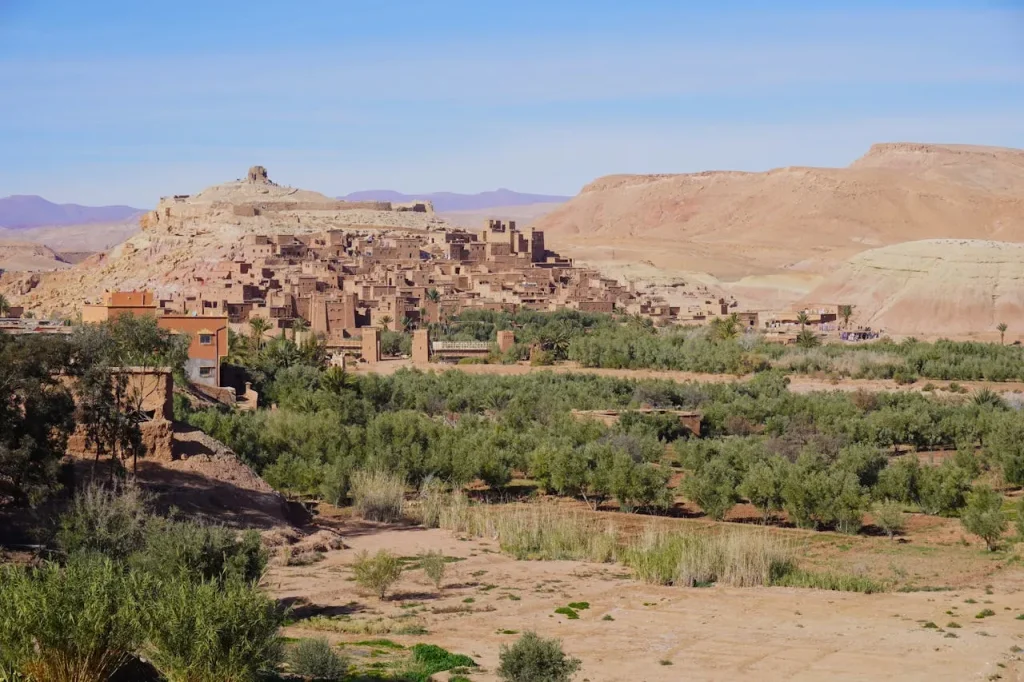
Perhaps the most iconic historical monument in the High Atlas region, Aït Benhaddou is a stunning example of southern Moroccan earthen clay architecture. Perched dramatically along the former caravan route between the Sahara and Marrakech, this fortified village — known locally as a ksar — dates back to at least the 11th century. Its towering mud-brick walls, decorated with geometric patterns and flanked by ancient granaries, have made it one of Morocco’s most photographed sites.
Recognized as a UNESCO World Heritage Site since 1987, Aït Benhaddou has served as a backdrop for numerous Hollywood productions, including Lawrence of Arabia, Gladiator, and the television series Game of Thrones. Walking through its narrow alleys, climbing to the hilltop granary for a panoramic view, and crossing the shallow river to reach its entrance all form part of an unforgettable historical experience.
2. Glaoui Kasbah of Telouet
Hidden in the folds of the High Atlas, near the old Tizi n’Tichka pass, lies the Kasbah of Telouet — once the seat of power of the powerful Glaoui clan. Built in the 19th and early 20th centuries, this elaborate fortress served as the palace of Thami El Glaoui, the Pasha of Marrakech, who ruled much of southern Morocco under French colonial patronage.
Today, the kasbah stands in a state of romantic decay, yet its interior halls reveal breathtaking examples of traditional Moroccan craftsmanship: intricate zellige tilework, carved stucco ceilings, and painted cedar woodwork. A visit to Telouet offers not just architectural beauty, but also a complex and layered chapter of Moroccan political history. The surrounding landscape — bare mountains, Berber villages, and almond orchards — adds to the sense of stepping back in time.
3. The Ancient Village of Aït Bou Goumez
The Aït Bou Goumez Valley, often called the “Happy Valley” by trekkers, shelters some of the oldest continuously inhabited villages in the High Atlas. The valley is home to traditional Amazigh (Berber) communities whose stone-built homes, communal granaries (agadirs), and ancient irrigation systems (seguias) represent thousands of years of mountain civilization.
The agadirs, in particular, are of great historical interest. These collective fortified granaries were used by communities to store grain, valuables, and documents in times of conflict. Some of the agadirs in Aït Bou Goumez are believed to date back several centuries and remain in a remarkable state of preservation. Visiting these structures provides a vivid glimpse into the self-sufficient and resilient way of life that Amazigh communities have maintained across generations.
4. Prehistoric Rock Engravings of Oukaimeden
At an altitude of over 2,600 meters, the Oukaimeden plateau — known today as a ski resort — conceals one of Morocco’s most remarkable prehistoric treasures. Scattered across the rocky slopes are thousands of ancient rock engravings, or petroglyphs, carved by prehistoric peoples thousands of years ago.
These engravings depict animals such as bulls, antelopes, elephants, and ostriches — creatures that once roamed a greener and wetter North Africa during the Neolithic period. Human figures, weapons, and ritual symbols are also visible. The site, recognized by UNESCO as a heritage area, offers a direct connection to the earliest inhabitants of the Atlas Mountains and challenges visitors to imagine a North Africa vastly different from today’s landscape.
5. The Tin Mal Mosque
Deep in the Nfis Valley of the High Atlas, accessible via a winding mountain road from Marrakech, stands one of Morocco’s most historically significant religious monuments: the Tin Mal Mosque. Built in 1153 by the Almohad dynasty, this mosque was the spiritual birthplace of one of the most powerful Islamic empires ever to rule North Africa and the Iberian Peninsula.
The Almohads, who preached a reformed and austere form of Islam, began their movement in the High Atlas among the Masmuda Berber tribes. Tin Mal was the site where their founder, Ibn Tumart, established his religious community, and where his successor Abd al-Mu’min launched the conquest that would stretch the empire from Senegal to the borders of France. The mosque, largely restored, remains one of the few Almohad-era structures open to non-Muslim visitors, making it an extraordinary site of world historical importance.
6. The Berber Villages of the Ourika Valley
Just an hour’s drive south of Marrakech, the Ourika Valley opens into a lush corridor of traditional Berber settlements clinging to steep cliffs above a rushing river. While many villages here are relatively recent in their current form, their foundations — along with the terraced fields, water mills, and communal spaces — reflect centuries of Amazigh agricultural tradition.
The village of Setti Fatma, at the valley’s upper end, is particularly notable for its local moussem, an annual religious festival held at the shrine of a local saint. These moussems have been observed for centuries and remain important occasions for community gathering, music, and trade. The valley also features several small but informative museums of Berber culture and heritage.
7. The Kasbah of Dades and the Valley of Roses
On the southern slopes of the High Atlas, the Dades Valley is lined with magnificent earthen kasbahs rising like sentinels above fields of roses and almond trees. Many of these kasbahs date back to the 17th and 18th centuries and were built by local Berber chieftains to defend their communities from rival clans and desert raiders.
The nearby Valley of Roses, centered around the town of Kelaa M’Gouna, is celebrated not only for its stunning landscape but also for the ancient rose-distilling tradition practiced by local communities for generations. Every spring, the harvest of Damascus roses fills the air with fragrance, and the festival of the roses brings thousands of visitors to a region where history, nature, and culture are deeply intertwined.
Practical Tips for Visiting Historical Sites in the High Atlas
- Best Time to Visit: Spring (March to May) and autumn (September to November) offer the most pleasant weather for mountain travel and sightseeing.
- Getting There: Most sites are accessible by road from Marrakech. A 4×4 vehicle is recommended for reaching remote villages and valley sites.
- Local Guides: Hiring a licensed local guide greatly enhances the experience, providing cultural context and access to community members.
- Respect Local Customs: Many historical sites are in or near active communities. Dress modestly, ask permission before photographing people, and respect religious sites.
- Accommodation: Traditional guesthouses (riads and auberges) in valley villages offer authentic and comfortable stays.
Conclusion
A journey through the historical monuments of the High Atlas Mountains is far more than a sightseeing excursion — it is an immersion into millennia of human civilization, resilience, and creativity. From the mud-brick grandeur of Aït Benhaddou to the prehistoric carvings of Oukaimeden, from the Almohad spirituality of Tin Mal to the living traditions of Amazigh villages, the High Atlas offers a richness of heritage that few destinations in the world can match.
Morocco’s High Atlas stands as a testament to the enduring spirit of the people who have called these mountains home — a landscape where the past is not buried, but breathes in every stone, every alleyway, and every horizon.